PSSR Amendment 2026

About Course
⚠️ Disclaimer
This course is created strictly for additional value addition and practice purposes only. It is not intended to promote copying, cheating, or bypassing any official training or examination process.
Learners are strongly advised not to rely on this material as a substitute for the official PSSR course. You must complete your full PSSR training through the authorized and approved training institute or official authority website.
This practice material is designed only to help reinforce concepts after completing the official course. Always follow the guidelines, curriculum, and certification process provided by the recognized maritime authority.
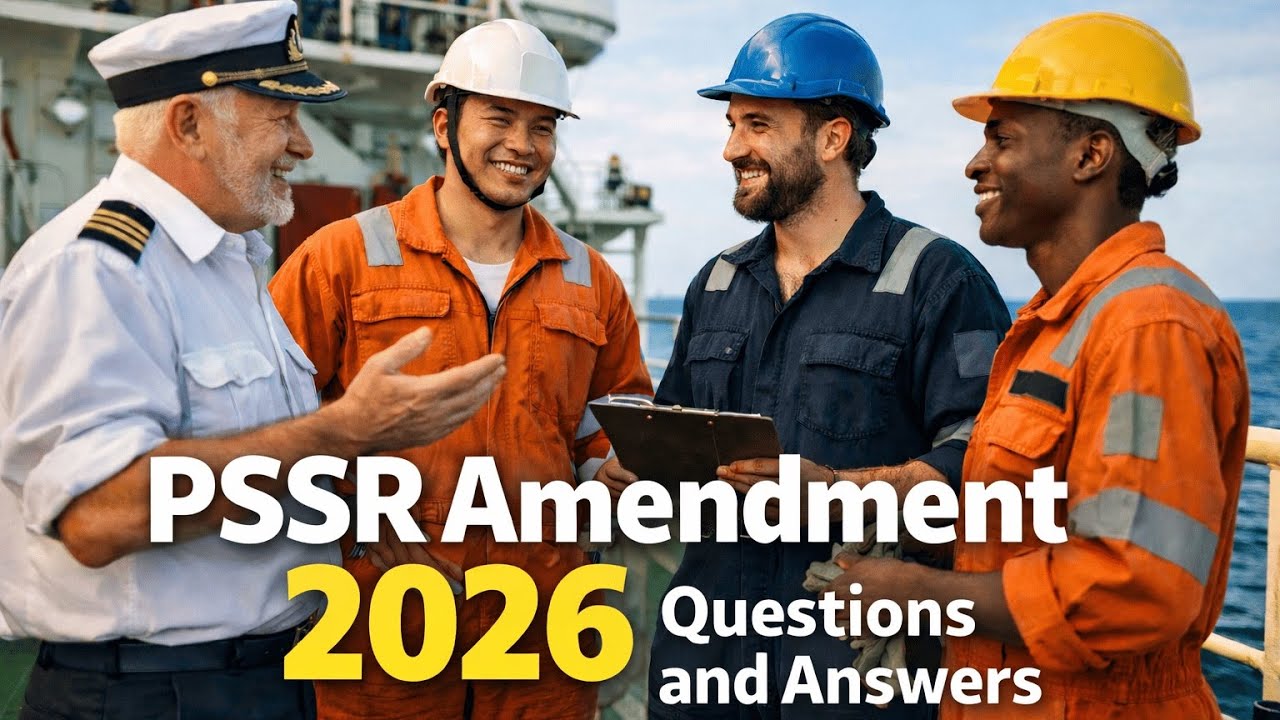
The PSSR Amendment 2026 course is a mandatory update to the STCW Code (Table A-VI/1-4) following IMO Resolution MSC.560(108). It introduces new competencies focused on the prevention of and response to violence and harassment onboard, including bullying, sexual harassment, and sexual assault.
- India (DG Shipping):
- Mandated Update: All Indian seafarers with PSSR certificates issued before December 1, 2025, must complete the 3-hour e-learning course (Course ID 957 – PSSRAMDT).
- Compliance: This must be completed before joining a vessel on or after January 1, 2026.
- Process: Enroll via the DGS E-Learning Portal using your INDoS number. A 50% pass mark is required.
- United Kingdom (MCA):
- Existing Seafarers: According to MIN 729 (M+F), seafarers who already hold a valid PSSR certificate are not required to retake the course.
- Future Courses: New trainees taking PSSR for the first time from January 1, 2026, will complete a revised full course that integrates these topics.
- Philippines (MARINA):
- Mandatory Update: Seafarers joining vessels from January 1, 2026, must have completed updating training on BT-PSSR as per Advisory No. 2025-40.
- Mandatory Update: Seafarers joining vessels from January 1, 2026, must have completed updating training on BT-PSSR as per Advisory No. 2025-40.
- Identification: Recognizing unacceptable behaviors and indicators of harm.
- Prevention: Understanding factors like abuse of power, stress, and isolation that contribute to harassment.
- Response: Practical knowledge of intervention methods, reporting procedures, and trauma-informed support.
Port State Control (PSC) and company audits may now verify compliance with these updated standards to ensure shipboard safety. Even if not mandated by your flag state, many companies and organizations like Maersk Training recommend the training to promote a safe culture.
Course Content
MCQ Questions
-
MCQs
Mock Text
Student Ratings & Reviews